
Moisture Meter Readings After Water Damage: A Brooklyn, MD Guide
Why a dry-looking wall can still be wet
Water hides inside materials. Drywall, wood and plaster take in moisture and release it slowly. The surface can look and feel dry while the inside is still wet. Without measuring, you are guessing, and guessing wrong leads to mold, warped floors and musty smells weeks later.
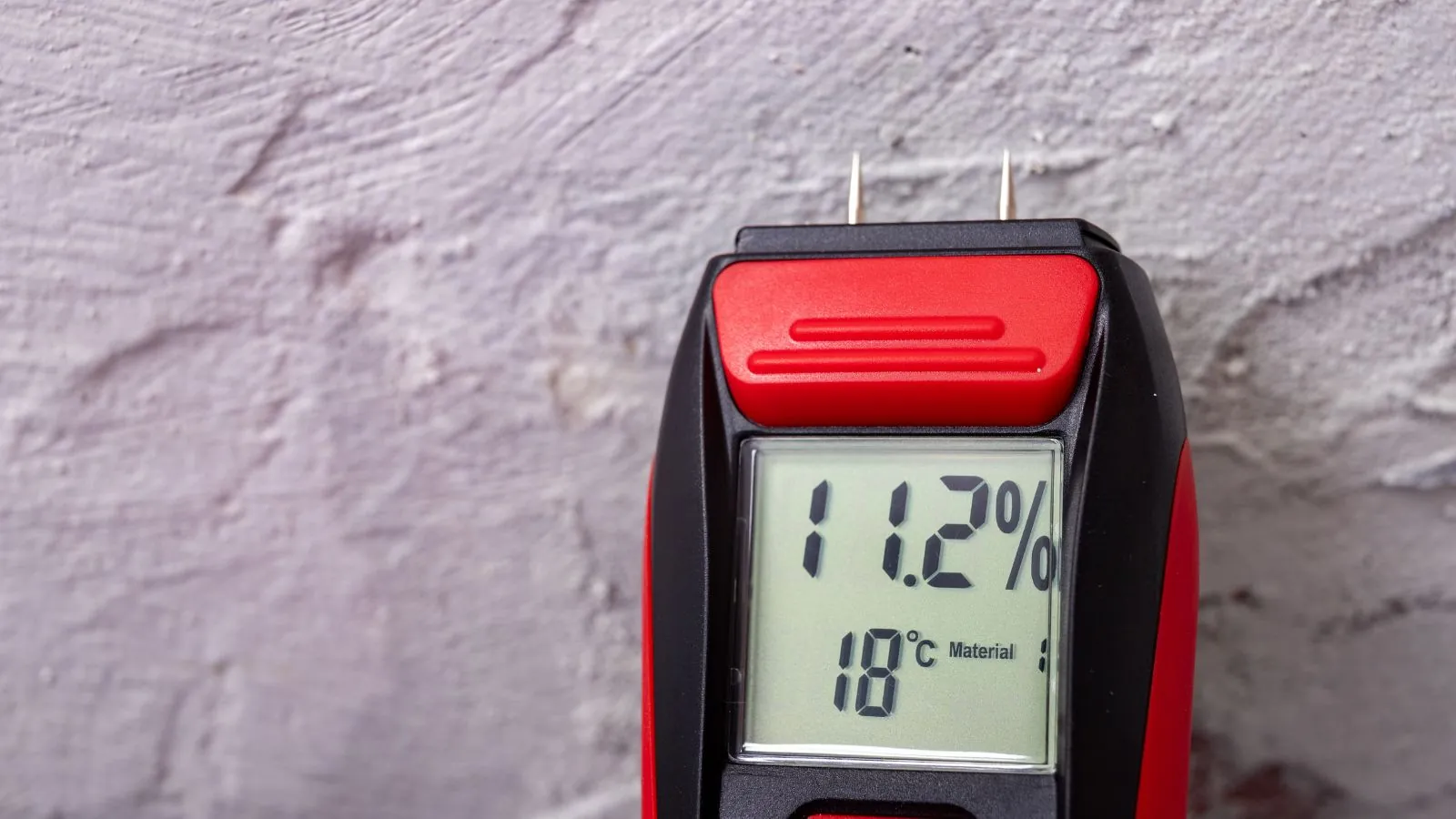
That is why a moisture meter is the first tool restoration technicians pick up. It turns a hunch into a number. This guide explains how meters work, what the numbers mean and how they are used to decide when a job is dry. It is general information, and readings always depend on the material.
The two main types of moisture meter
Most meters used in water damage work fall into two groups.
| Type | How it works | Good for | Limits |
|---|---|---|---|
| Pin | Two pins push into the material and measure electrical resistance | Wood and drywall at a specific depth | Leaves tiny holes |
| Pinless | A flat sensor reads a zone under the surface without penetrating | Scanning large areas quickly | Reads a general zone, not an exact depth |
| Thermal camera | Shows surface temperature differences | Finding cold, damp patches | Does not measure moisture directly |
Many technicians use a pinless meter to scan and a pin meter to confirm. A thermal camera helps point to where to scan, but the meter gives the number.
Reading the numbers
Meters show different scales. Some show a percentage for wood. Others show a relative scale for drywall and concrete. A number only means something when compared to a reference. The reference is the same material in a dry part of the building.
So the first step is to measure unaffected areas of the same material and note the readings. That is the drying goal. When the wet materials read close to the goal, they are dry. Without a reference, a number is just a number.
- Take dry reference readings in an unaffected room first.
- Use the same meter and setting for wet and reference areas.
- Read at several heights on a wall, because water wicks upward.
- Check the floor, the baseboard and the wall bottom.
- Record each reading with a location and date.
What the EPA says about timing
The EPA advises drying wet materials within 24 to 48 hours to limit mold growth. Meters help meet that goal because they show where drying needs to focus. A technician who finds a wet wall bottom early can place a fan correctly, and a technician who relies on touch may miss it.
For mold areas larger than about 10 square feet, the EPA guide suggests considering professional help. A meter does not detect mold, but a persistently high reading is a warning sign.
What homeowners can and cannot do with a meter
Consumer meters are cheap and useful for a quick check. They can tell you if a wall is wetter than another wall. They are less reliable for precise numbers. Concrete, plaster and metal can throw off readings. Foil-backed insulation and wallpaper can too.
If you buy one, treat it as a screening tool. For anything after a flood or a burst pipe, a professional assessment is more reliable. Our structural drying and dehumidification page shows how readings drive the equipment plan.
- Test several spots, not one.
- Compare to a dry area.
- Do not trust readings on metal or foil.
- Recheck after a day.
- Call for help if numbers stay high.
A short walkthrough of a moisture check
A technician starts by taking a dry reading in a room that was not affected. Then they scan the wet room in a pattern, wall by wall and floor section by section, marking where readings are high. They check at several heights and note readings on a floor plan. A thermal camera confirms cold patches.
The map guides equipment placement. After drying starts, the technician repeats readings daily at the same spots, so changes are easy to see. When the numbers match the reference, the area is dry and the equipment can come out.
- Reference readingMeasure a dry area of the same material.
- Scan the roomCheck walls, baseboards and floors in a pattern.
- Mark and mapWrite readings on a floor plan.
- Repeat dailySame spots, same meter, same settings.
- Final checkCompare to the reference and record the result.
Limits to remember
Moisture meters do not tell you why a wall is wet. They do not detect mold, and they do not predict how a material will behave when dried. Readings can be thrown off by metal, salts and some finishes. That is why technicians use a meter together with a thermal camera, a visual check and a smell test.
If a reading puzzles you, ask the technician to explain. A good one will show you the dry reference and what the number means in context.
Buying a meter for your home
If you want a meter for home use, look for one that shows readings for wood and drywall and has a clear display. Read the instructions. Take baseline readings around your house when everything is dry, and write them down. After a leak, compare to those baselines. A baseline is worth more than any single number.
Remember that a home meter is a screening tool. If readings are high, or if you are unsure, ask for a professional assessment.
Meters in older Brooklyn homes
Plaster and lath walls and brick party walls behave differently from drywall. A meter calibrated for drywall may mislead on plaster. Technicians adjust by using the right scale and comparing to a dry plaster wall nearby.
In Curtis Bay and Brooklyn rowhomes, a leak on one floor often shows up as moisture in the wall of the next. Take readings along the whole wall and into the next room. In Glen Burnie basements, finished walls can hide damp framing behind them.
Where this guidance comes from
Moisture readings only mean something against a dry reference, which is how the ANSI/IICRC S500 standard frames drying goals. The EPA also advises drying wet materials within 24 to 48 hours to limit mold growth.
Moisture meter questions
What reading means a wall is dry?
It depends on the material and the meter. A technician compares to a dry reference reading from the same material in the building.
Can a thermal camera replace a meter?
No. It shows temperature differences that suggest moisture. A meter confirms it.
How long until a wall reads dry after a leak?
Often three to five days with drying equipment, longer for dense materials.
Do meters work on concrete?
They give a relative reading. Concrete slabs need special tests for floor coverings.
Why does the same wall read differently on different days?
Humidity, temperature and drying progress change the reading. Daily logs show the trend.
Water in the building? Call now.
A dispatcher answers around the clock. Scope and price are explained before work starts.
Call (667) 767-7092Brooklyn, MD address and map
Listed address: 5001 Ritchie Highway, Brooklyn, MD 21225. Dispatch runs 24 hours a day, so call before you drive over.