
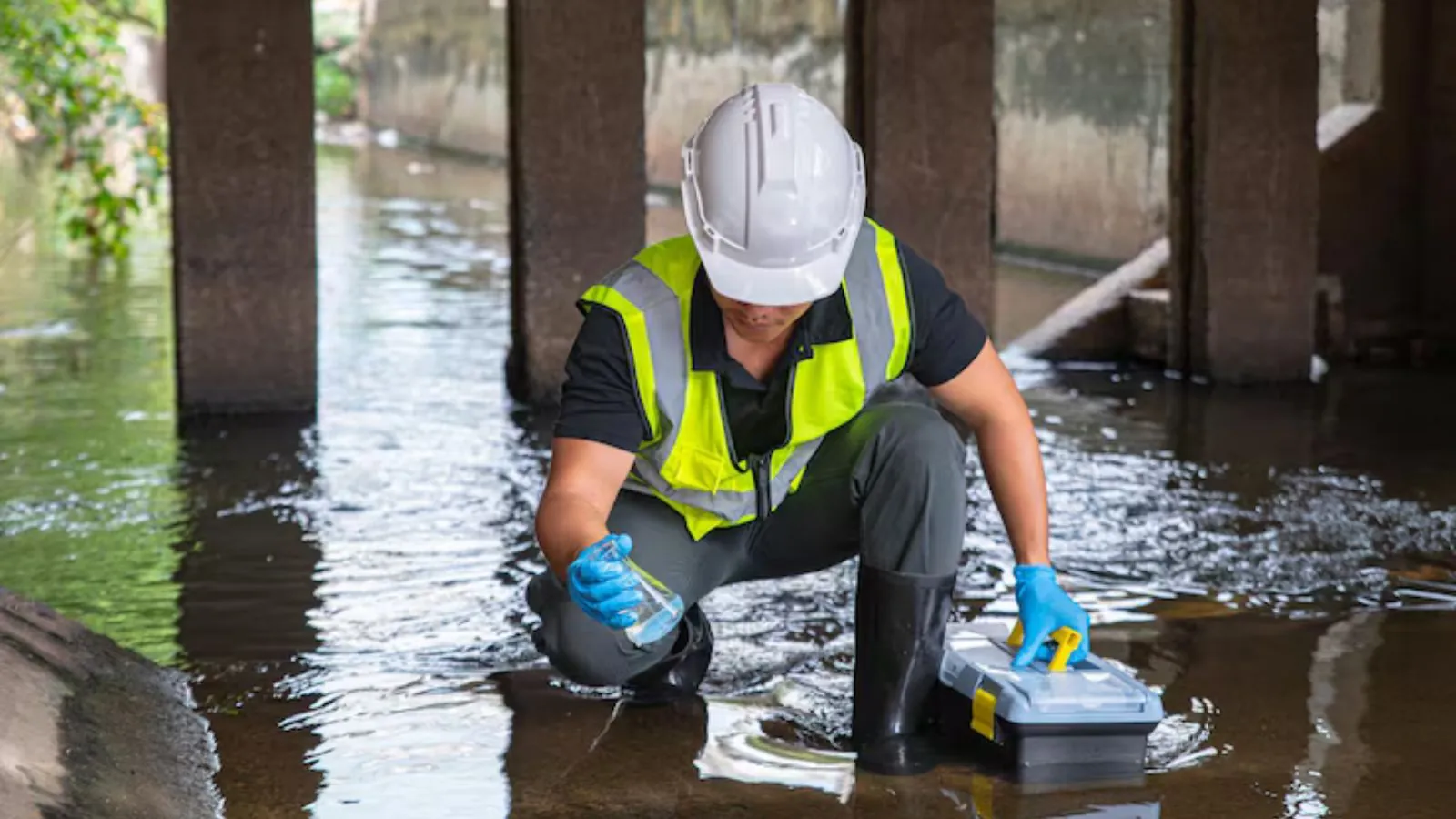
Emergency Water Extraction in Brooklyn, MD
Standing water is an emergency, and our dispatch line is open 24/7. While you wait, stop the source if you can, shut off the main valve, keep people and pets out, and lift small items off wet floors. Leave electrical panels alone if water is anywhere near them.
- Open 24 hours.
- Scope and price explained first.
- Serving Brooklyn and nearby towns.
- Call-only dispatch.
What water extraction means in a Brooklyn home
Water extraction is the removal of standing water and saturated material from a building, using pumps, wet vacuums and weighted extraction wands, before any drying equipment goes in. It is the first real step of water damage restoration, and it sets the clock for everything after it. Water that sits for a day soaks into plaster, subfloors and baseboards, so the job gets larger every hour it waits.
Brooklyn is a neighborhood of Baltimore, and a lot of its housing was built between the 1850s and the 1960s. Older rowhomes and mid-century apartments often have basements, shared walls and cast-iron drains that all move water in ways a newer house does not. We pair extraction with structural drying so the building is dry, not just empty of puddles.
When standing water is an emergency
Treat water as an emergency when it is still coming in, when it covers more than a few square feet, when it touches an outlet or an appliance, or when it reached a finished room. Those situations call for a dispatcher right away, not a mop. A slow trickle from a failed hose is different from a basement with several inches of water, but both can be urgent for the floor above.
- The source is still running, or you cannot find where it started.
- Water is deeper than the baseboard, or it reached carpet, hardwood or drywall.
- The water came from a drain, a toilet or the street, which may carry bacteria.
- Water is near the electric panel, a power strip or a plugged-in appliance.
- Anyone in the home is older, very young or has a breathing problem.
If the water came from a sewer line or a backed-up drain, treat it as contaminated and read about sewage backup cleanup before you touch anything. Baltimore City residents can also report a water main or street flooding problem to 311, and that call does not replace calling a restoration crew for the inside of the building.
How we remove the water
We start with a walk-through to find the source, the depth, the materials touched and anything unsafe. Then we choose equipment to fit the room. Submersible pumps handle deep water in a basement. Truck-mounted or portable extraction units pull water out of carpet and pad. Weighted wands press water from the fiber so it is not left behind.
- Make it safeWe check for electrical and slip hazards and tell you what to leave alone.
- Pump the bulkSubmersible pumps clear deep water, then a wet vacuum clears what is left.
- Extract the soft goodsCarpet and pad are worked with an extraction wand to pull water from the fibers.
- Measure what remainsA moisture meter and a thermal camera show wet areas that look dry.
- Hand off to dryingAir movers and dehumidifiers take over once the standing water is gone.
Extraction removes liquid water only. Moisture inside studs, subfloor and masonry stays behind until it is dried out. A building that looks dry after a pump-out can still be wet inside the walls, which is why the drying step is not optional.
Extraction choices and their trade-offs
Not every wet material is worth saving. Carpet with clean water can often be extracted and dried in place. The same carpet after sewage or flood contact is usually removed. Pad is cheap to replace and hard to dry, so it often goes either way. Hardwood may be saved if it is dried fast, though some boards will still cup.
| Material | Clean-water leak | Contaminated water |
|---|---|---|
| Carpet | Extract and dry in place | Remove and replace |
| Carpet pad | Often replaced | Replace |
| Hardwood | Dry quickly, may need sanding | Often removed |
| Drywall | Dry or cut out the wet part | Cut out and replace |
| Plaster and lath | Dry slowly, check for loose areas | Remove affected sections |
A technician will tell you which side of that table your job falls on before work starts. If you disagree, say so, because it is your home and the decision is yours.
Water on the floor right now?
Dispatch is open 24 hours a day. Tell us what happened and we will explain the plan and the price before work begins.
What drives extraction pricing
No two flooded rooms are alike, so we avoid quoting a number before seeing the space. These are the factors that move the price most.
Water depth and area
More square feet and deeper water mean more pumping time and more equipment.
Category of water
Clean-water leaks cost less to handle than gray or black water, which need protective gear and disposal.
Access
A finished basement with a narrow stair takes more handling than a ground-floor kitchen.
Material removal
Pulling carpet, pad or baseboard adds labor, and hauling adds more.
Time of day
Night and weekend calls can carry a different rate, which we state up front.
If a covered event caused the water, your homeowner or renter policy may help pay. Policies differ on what counts as sudden, so check your policy and call your carrier early. Many policies exclude rising floodwater, which usually needs a separate flood policy.
We document the job with photos and moisture readings so you have records to share with your insurer. We do not promise what any insurer will approve.
Where this guidance comes from
The ANSI/IICRC S500 standard, which guides professional water damage restoration, sorts water into categories by contamination. That sorting is why we ask where your water came from before we pick equipment or decide what is removed.
Water extraction questions
Do you handle water extraction emergencies at night or on weekends in Brooklyn?
Yes. Dispatch answers 24 hours a day, every day. Call (667) 767-7092 and describe the water, and we will explain what happens next. We do not promise an arrival time, but we do say what we can do and when we expect to be able to start.
How soon should standing water be removed?
As soon as it is safe. The EPA advises drying wet materials within 24 to 48 hours to limit mold growth, so extraction on day one gives drying the best chance.
Can I use a wet vacuum from the hardware store?
For a small spill, yes. For anything larger, consumer units are too slow and cannot pull water from pad and subfloor, so moisture stays in the building.
Is it safe to walk through the water?
Not if it is near outlets, the panel or appliances, or if it may be sewage. Stay out and call the utility or 911 for any electrical or gas concern before you call us.
What happens after the water is out?
We measure moisture, set air movers and dehumidifiers, and check readings until the structure reaches its drying goal. Then we explain any repairs that remain.
Related help in Brooklyn
Most extraction jobs lead to one of a few next steps. A burst pipe or a failed fixture may need a plumber first. Stormwater in a lower level is covered in basement water damage cleanup. Shops and offices along Ritchie Highway can read about commercial water damage restoration. Crews also serve Curtis Bay and Glen Burnie.
Water in the building? Call now.
A dispatcher answers around the clock. Scope and price are explained before work starts.
Call (667) 767-7092Brooklyn, MD address and map
Listed address: 5001 Ritchie Highway, Brooklyn, MD 21225. Dispatch runs 24 hours a day, so call before you drive over.